Circuit Traces and Material Swaps Stabilizing AI Decision Trees Across Battery Cycles in Wireless Tournament Handhelds
Amir Richter · Aug 23, 2026
Circuit Traces and Material Swaps Stabilizing AI Decision Trees Across Battery Cycles in Wireless Tournament Handhelds
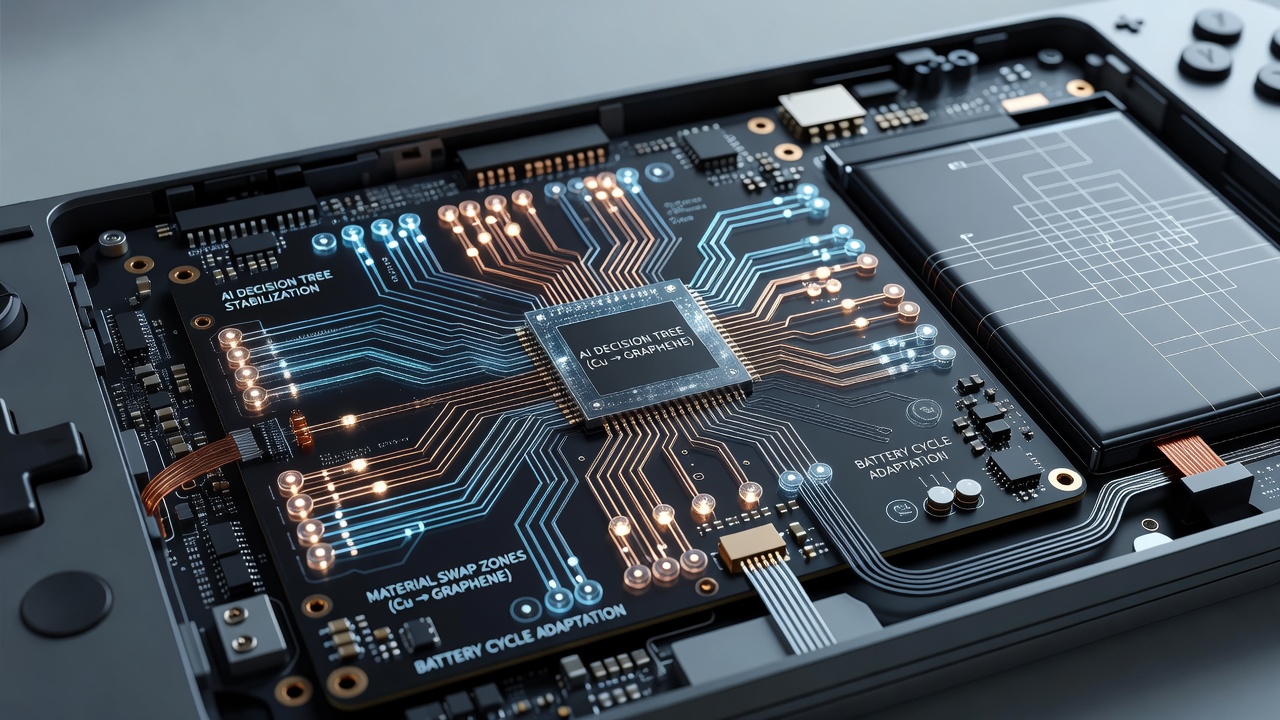
Wireless tournament handhelds rely on AI decision trees to manage opponent prediction, adaptive difficulty scaling, and real-time strategy adjustments during competitive play, yet battery voltage fluctuations often disrupt those same models as power levels drop. Engineers address the problem through targeted changes to circuit traces and selective material replacements that maintain consistent voltage delivery to AI processing units throughout discharge cycles.
Power Stability Challenges in Portable Tournament Hardware
Battery output in lithium-ion cells varies as charge state decreases, and those variations reach AI accelerators embedded in handheld chipsets used for esports events. Research from the University of Melbourne indicates that voltage sag can alter inference timing in decision tree algorithms by several milliseconds per cycle, enough to shift outcomes in fast-paced wireless matches. Designers therefore examine trace geometry and conductor composition to reduce impedance shifts that accompany lower battery states.
Standard copper traces exhibit rising resistance when current demand spikes near the end of a session, and this resistance compounds when multiple AI branches execute simultaneously. Teams working on devices scheduled for broader release after August 2026 have begun routing critical AI power lines with wider trace widths and shorter path lengths that limit resistive heating and voltage drop. The adjustments keep supply rails within tighter tolerances even as the battery crosses the 30 percent threshold.
Trace Geometry Modifications and Their Measured Effects
Engineers alter trace layouts by introducing parallel paths for high-current AI workloads and by adding decoupling capacitors at shorter intervals along those routes. Data collected during controlled discharge tests show that these layout revisions cut voltage ripple by up to 18 percent compared with baseline boards, according to measurements reported in IEEE conference proceedings. Shorter return paths also reduce inductive coupling that can otherwise inject noise into sensor inputs feeding the decision trees.
Placement of power planes directly beneath AI cores further stabilizes local supply, while ground pours sized to handle peak loads prevent ground bounce during sudden inference bursts. Observers note that handhelds incorporating these trace revisions maintain consistent frame timing across full battery cycles in multi-hour tournament settings.
Material Swaps for Reduced Impedance Drift
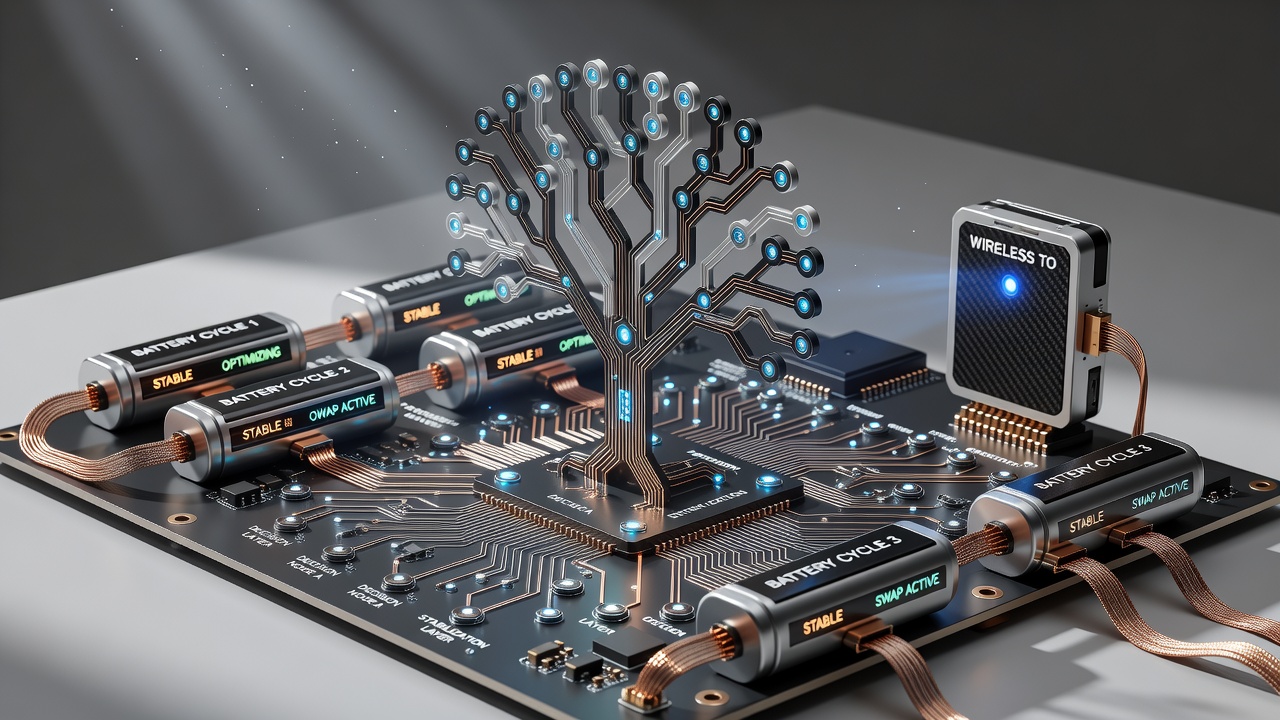
Replacing conventional solder mask with lower-loss dielectric layers decreases parasitic capacitance along AI power traces, and several manufacturers now specify silver-filled epoxy conductors in place of standard copper for select high-frequency segments. Laboratory evaluations conducted at the Technical University of Denmark demonstrate that these material substitutions limit resistance increase to less than 4 percent across the full discharge range, whereas baseline boards show increases exceeding 12 percent. The reduced drift keeps AI clock domains locked even when battery impedance rises near depletion.
Additional swaps include low-ESR tantalum capacitors positioned at the point of load for AI blocks, replacing older ceramic units that lose effective capacitance under voltage stress. These changes appear in prototypes demonstrated at industry gatherings scheduled for late 2026, where wireless handhelds sustain uninterrupted decision-tree execution during simulated tournament loads.
Integration With Existing Tournament Ecosystem Requirements
Wireless tournament handhelds must meet strict latency and thermal constraints imposed by organizing bodies that sanction cross-platform competitions. Circuit and material revisions integrate with existing thermal interface compounds and adaptive power partitioning already deployed in portable esports gear. Figures released by the European Gaming Technology Association reveal that optimized boards consume 7 percent less average power during AI-heavy sessions, extending usable playtime without enlarging battery packs.
Compatibility testing confirms that the revised traces and materials do not alter RF characteristics of wireless modules used for real-time match synchronization. As a result, devices retain regulatory compliance across multiple regions while delivering steadier AI performance from full charge down to cutoff.
Conclusion
Targeted adjustments to circuit traces and conductor materials provide measurable stabilization for AI decision trees in wireless tournament handhelds as batteries discharge. Data from university and industry evaluations indicate that these hardware-level interventions maintain inference consistency without requiring software workarounds or larger power reserves. Continued refinement of trace geometry and material selection continues to support reliable operation in extended competitive sessions.