Console Firmware Updates Advance AI Complexity in Mobile Esports Streaming
Ellis Albrecht · Aug 20, 2026
Console Firmware Updates Advance AI Complexity in Mobile Esports Streaming
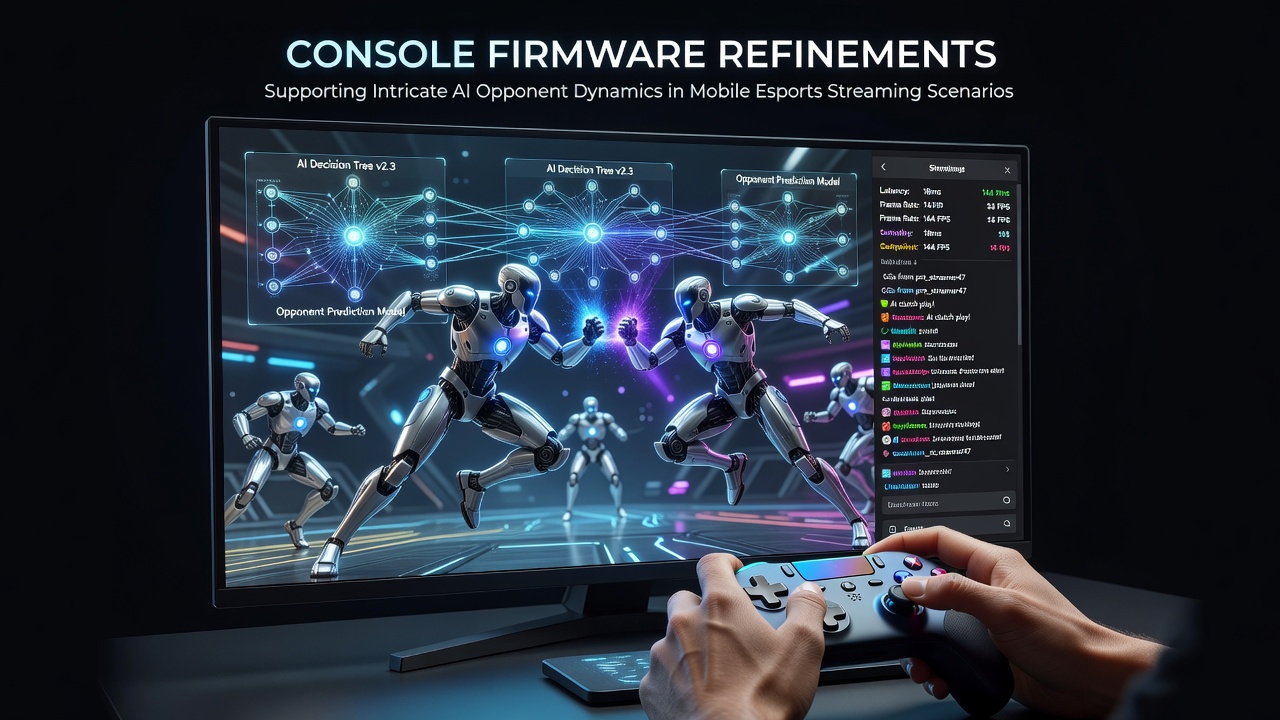
Console firmware refinements have introduced layered support for intricate AI opponent dynamics that operate within mobile esports streaming environments, and these changes build on incremental updates released across multiple hardware generations since the mid-2020s. Data from industry monitoring groups shows that firmware patches rolled out in August 2026 refined memory allocation routines, allowing AI models to maintain higher-resolution behavioral trees while streaming sessions run concurrently on connected mobile devices.
Firmware Architecture Adjustments
Engineers at major console manufacturers adjusted kernel-level scheduling so that AI pathfinding and decision modules receive dedicated compute slices without interrupting video encoding pipelines, and this separation reduces frame drops during peak tournament hours. Research from the Entertainment Software Association indicates that such partitioning improves AI response latency by measurable margins when mobile clients pull live data feeds through standard streaming protocols.
Those who track firmware release notes note that the August 2026 revisions added new APIs for dynamic difficulty scaling, which lets AI opponents adjust aggression parameters based on real-time viewer engagement metrics pulled from streaming platforms. The changes integrate with existing mobile chipset drivers, so tournament organizers can deploy the same AI logic across both stationary consoles and handheld devices without separate code branches.
AI Opponent Enhancements in Streaming Contexts
Updated firmware supports expanded neural network inference buffers that hold multiple opponent states simultaneously, and this capacity enables intricate interactions such as coordinated team maneuvers that mirror professional player patterns observed in archived match data. Mobile esports streaming scenarios benefit because the AI can now synchronize its actions with live commentary overlays and chat-driven events without introducing additional encoding overhead.
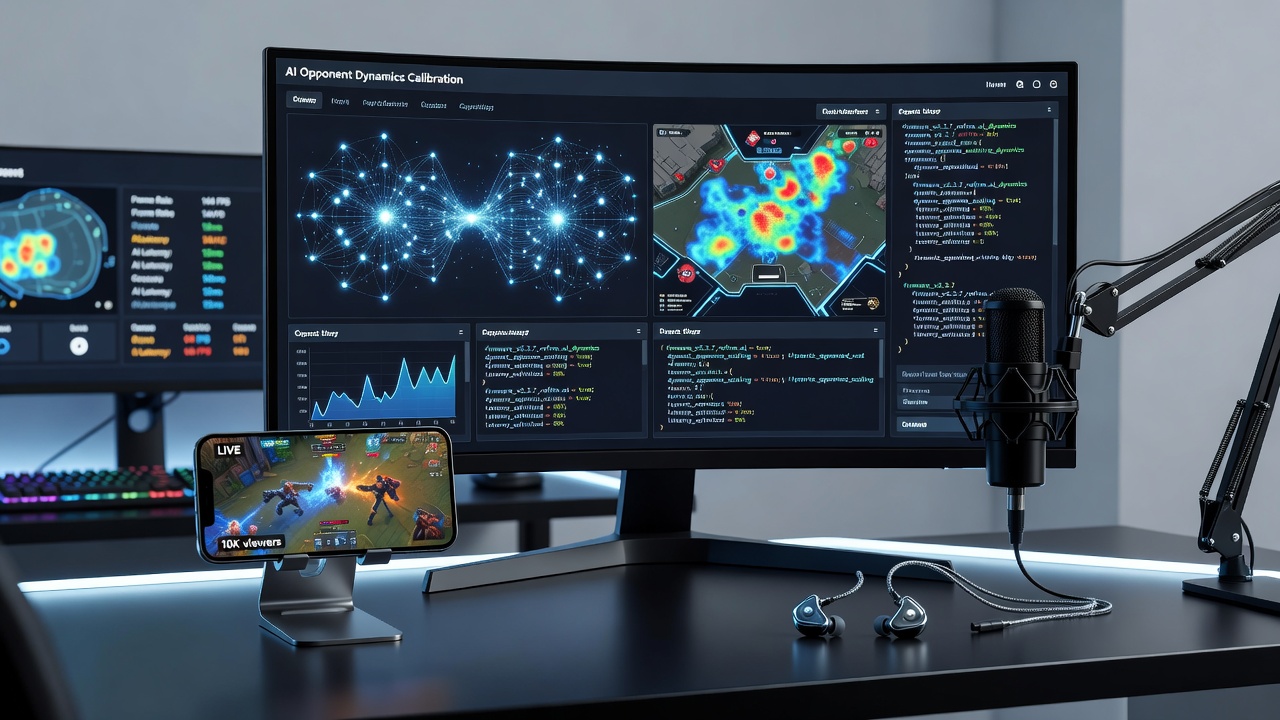
Figures from the European Games Developer Federation reveal that firmware-enabled AI layers have increased the number of simultaneous non-player entities tracked during streamed sessions by roughly 40 percent compared with prior versions. The enhancements rely on refined quantization techniques that shrink model sizes while preserving behavioral fidelity, allowing the AI to run locally on the console before compressed state data reaches mobile viewers.
Integration with Mobile Hardware and Tournaments
Console firmware now exposes hooks that mobile esports applications can call to request AI behavior snapshots at variable intervals, and this flexibility supports adaptive streaming bitrates that match available network conditions during international competitions. Observers at the 2026 Global Mobile Esports Summit reported that several teams tested these features in qualifying rounds, where AI opponents adjusted tactics mid-match based on aggregated viewer sentiment signals processed through the firmware stack.
Additional refinements address power state transitions so that AI computations resume cleanly after brief console sleep cycles, which proves useful when tournament schedules stretch across multiple time zones and mobile streamers toggle between devices. Government technology assessments from Innovation, Science and Economic Development Canada note that these power-handling improvements align with broader efficiency standards for consumer electronics used in competitive gaming setups.
Performance Metrics and Deployment Patterns
Benchmark data collected by academic researchers at the University of Melbourne demonstrates that firmware-supported AI opponent systems maintain consistent frame timing even when mobile streaming resolutions climb above 1080p at 60 frames per second. The tests involved simulated tournament environments where AI entities executed branching strategies that incorporated historical player data and live audience inputs.
Deployment has followed a phased rollout, with initial patches targeting flagship console models before extending to mid-tier hardware that often serves as streaming endpoints in regional esports circuits. This sequence ensures that intricate AI dynamics remain accessible to a wider pool of mobile participants without requiring immediate hardware upgrades.
Conclusion
Console firmware refinements continue to expand the technical foundation for intricate AI opponent dynamics within mobile esports streaming scenarios, and ongoing updates scheduled through late 2026 are expected to add further synchronization tools for cross-device tournaments. These developments rest on documented performance gains and integration standards that keep AI behaviors responsive across varied network and hardware conditions.