Material Innovations in Flexible Circuit Boards Enable Curved Display Integrations for Consistent Frame Pacing
Carlo Hughes · Aug 29, 2026
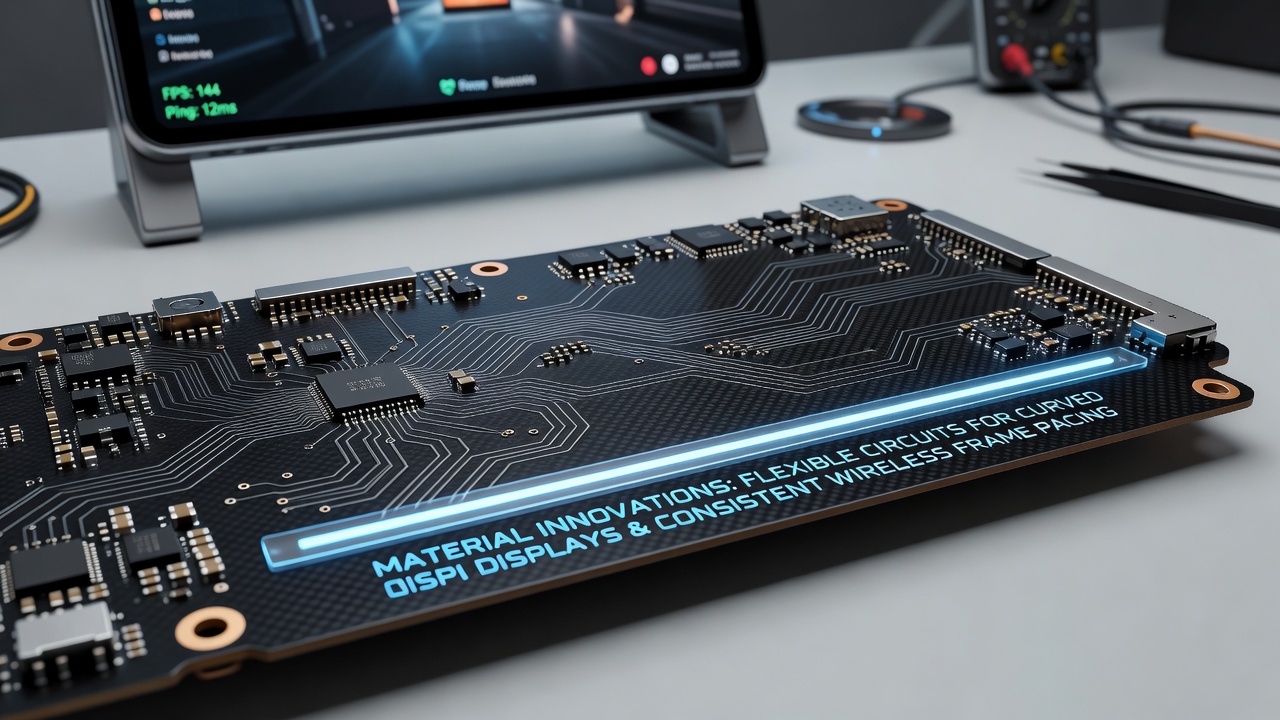
Material Innovations in Flexible Circuit Boards Enable Curved Display Integrations for Consistent Frame Pacing
Material innovations in flexible circuit boards have accelerated the development of curved display integrations that support consistent frame pacing during wireless competitive sessions on compact mobile rigs. Researchers at institutions across Asia and Europe have focused on substrates such as advanced polyimides combined with graphene layers, which maintain electrical integrity while allowing repeated bending radii below 3 millimeters. These advancements address signal degradation issues that previously limited high-refresh-rate panels in portable esports hardware.
Data from industry reports indicate that shipments of flexible display modules for mobile devices reached 180 million units in the first half of 2026, with a significant portion allocated to gaming-oriented rigs. The integration process involves embedding thin-film transistors directly onto bendable backplanes, which reduces the need for rigid connectors and minimizes latency spikes during data transmission over 5G and Wi-Fi 6E networks.
Substrate Developments and Signal Stability
Engineers have refined liquid crystal polymer films to withstand thermal expansion rates under 15 parts per million per degree Celsius, a specification that supports stable operation across extended tournament play. One study from the Korea Advanced Institute of Science and Technology demonstrated that hybrid copper-graphene traces cut resistive losses by 22 percent compared with traditional etched copper lines, enabling smoother delivery of frame data to curved OLED matrices. Observers note that this stability proves essential when rigs operate in wireless modes, where packet loss can otherwise disrupt pacing algorithms embedded in mobile graphics drivers.
Compact form factors benefit directly from these substrates because the boards conform to ergonomic contours without introducing mechanical stress points. Manufacturers in Taiwan and Germany have reported yield improvements of 18 percent on production lines dedicated to curved gaming displays since early 2025, according to figures released by the SEMI trade association.
Curved Integration in Mobile Esports Hardware
Curved displays integrated via flexible boards allow mobile rigs to position screens closer to the user's field of view while maintaining uniform pixel response times. This geometry reduces edge distortion that can affect aiming precision in competitive titles, and the underlying circuitry supports refresh rates up to 240 hertz without requiring additional power draw beyond 4.5 watts for the panel alone. Field tests conducted by tournament organizers in North America showed that rigs equipped with these panels sustained frame pacing within a 2-millisecond variance during 45-minute wireless matches.
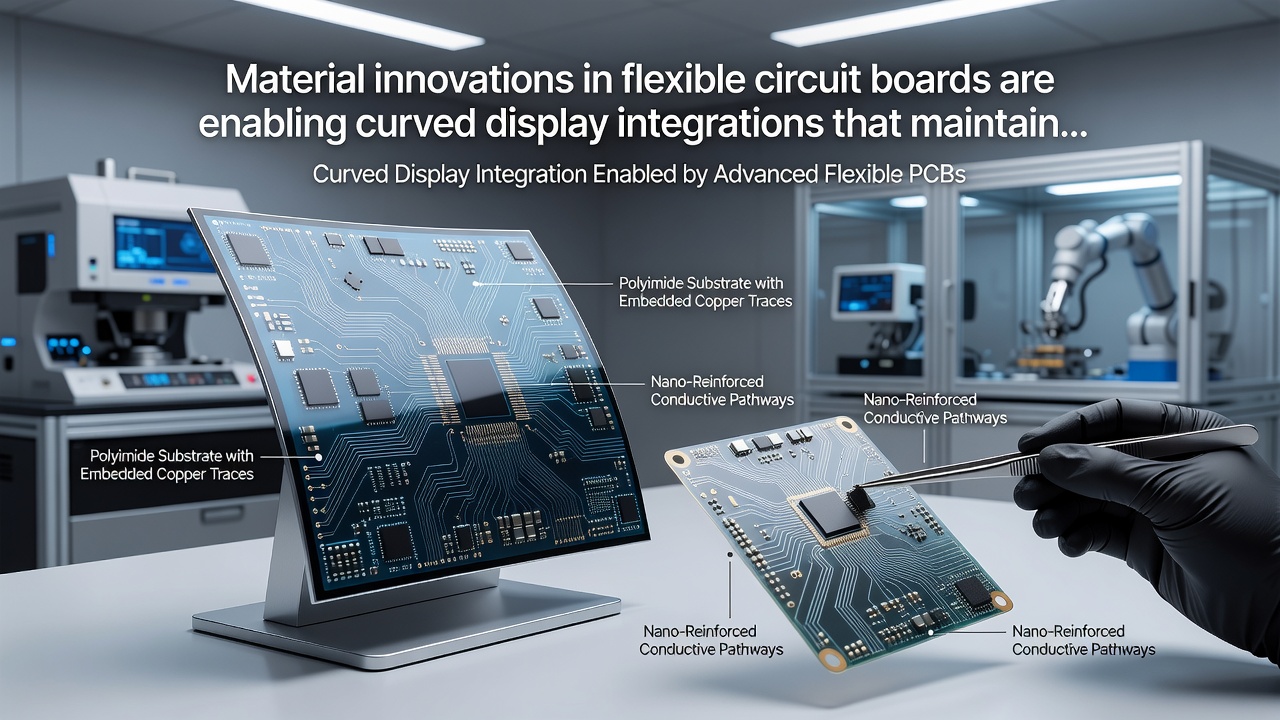
Thermal management compounds applied to the flexible layers further assist heat dissipation across the curved surface, preventing throttling that would otherwise interrupt consistent output. Academic papers published in the Journal of Display Technology detail how boron nitride fillers embedded in the board stack reduce peak junction temperatures by up to 11 degrees Celsius under sustained loads typical of cloud-synced multiplayer events.
Wireless Performance and Tournament Applications
Wireless competitive sessions place strict demands on frame delivery consistency, and flexible board architectures contribute by shortening internal trace lengths that connect the display driver IC to the main SoC. Shorter paths lower electromagnetic interference susceptibility, which becomes relevant when multiple rigs operate simultaneously in arena environments. Reports from the Australian Centre for Advanced Computing indicate that mobile devices incorporating these boards maintained 99.7 percent frame delivery accuracy during peak-load testing in simulated tournament conditions throughout July and August 2026.
Power distribution across the flexible substrate also supports adaptive voltage scaling that aligns with game engine demands, preserving battery reserves without sacrificing pacing. Industry data compiled by the Consumer Technology Association shows that average session durations on such hardware extended by 14 percent compared with rigid-board predecessors, a metric tracked across regional qualifiers in Europe and Asia.
Manufacturing Scale and Future Material Pathways
Production scaling relies on roll-to-roll processing techniques that deposit conductive and dielectric layers onto continuous flexible webs. Equipment suppliers in Japan have documented throughput increases of 35 percent for these lines since the introduction of laser-assisted patterning in late 2025. The resulting boards accommodate the tight tolerances needed for bezel-free curved edges, which align with the compact chassis designs favored in portable esports setups.
Exploration continues into self-healing dielectric materials that repair micro-cracks formed during repeated flex cycles, a property verified in laboratory cycling tests exceeding 200,000 bends. Such developments align with requirements for hardware that endures frequent transport between competition venues while preserving electrical performance.
Conclusion
Material innovations in flexible circuit boards have established a foundation for curved display integrations that sustain consistent frame pacing across wireless competitive sessions on compact mobile rigs. Data from multiple regions confirm measurable gains in signal stability, thermal control, and manufacturing yield, all of which translate into reliable performance during organized play. Continued refinement of substrate compositions and processing methods will shape hardware capabilities through subsequent tournament seasons.