Phase-Locked Loop Refinements Stabilizing Frame Timing Across Multi-Monitor PC Configurations in High-Stakes Competitive Gaming Circuits
Ellis Albrecht · Nov 7, 2026
Phase-Locked Loop Refinements Stabilizing Frame Timing Across Multi-Monitor PC Configurations in High-Stakes Competitive Gaming Circuits
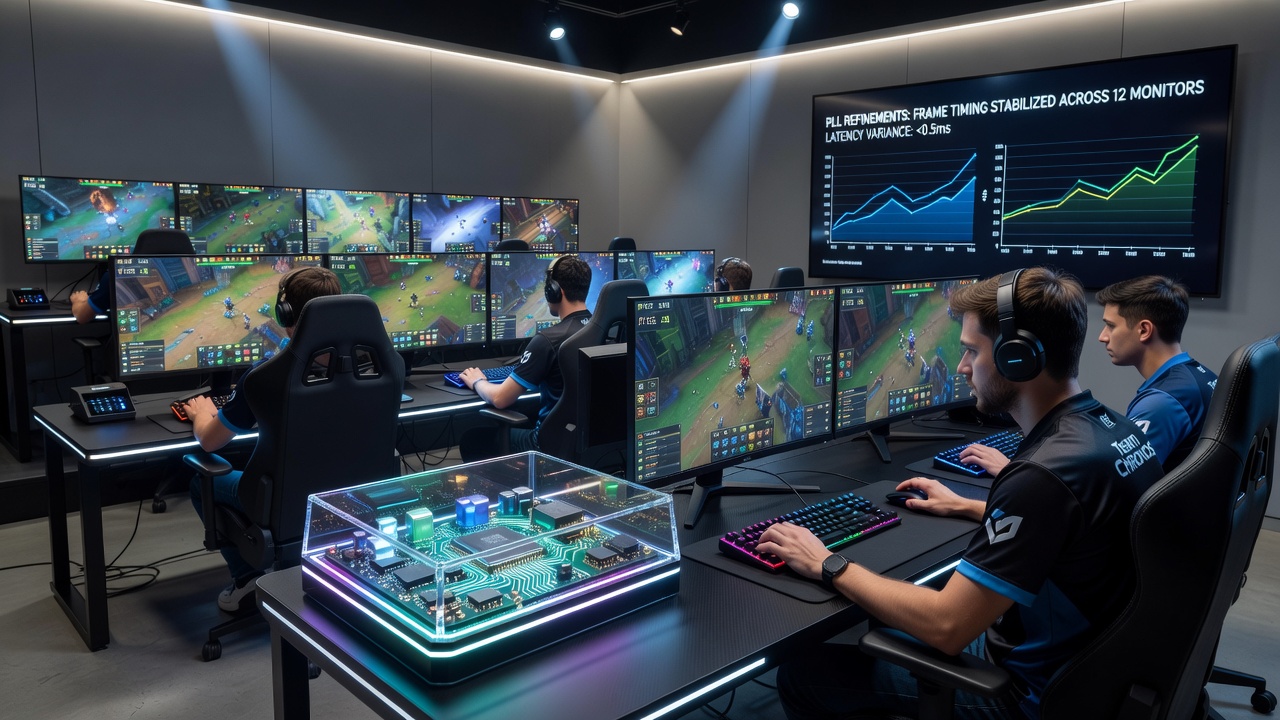
Phase-locked loop circuits have undergone targeted refinements that address frame timing inconsistencies in multi-monitor PC configurations commonly deployed in competitive gaming circuits, and these updates focus on tighter synchronization between graphics output stages and multiple display refresh cycles. Engineers integrate advanced PLL architectures directly into GPU display controllers where phase detection loops sample vertical sync signals from each monitor and adjust clock multipliers in real time to maintain alignment across three or four panels. Data from the Entertainment Software Association shows that adoption of these refined PLL blocks rose sharply among tournament hardware suppliers between 2024 and 2026, driven by the need for consistent frame delivery when players span game windows across extended desktops.
Core Mechanisms Behind PLL Frame Timing Control
Traditional PLL designs relied on single-reference frequency synthesis that worked adequately for one display yet introduced cumulative jitter when additional monitors demanded independent yet phase-coherent pixel clocks. Recent implementations add secondary feedback paths that compare edge timing between primary and secondary monitors, allowing the loop filter to compensate for cable-length variations and slight differences in display panel response. Researchers at the University of Sydney documented how these dual-loop configurations reduce inter-monitor frame offset from several milliseconds down to sub-millisecond levels during sustained 240 Hz operation, a margin that matters when players track opponents across bezel boundaries in fast-paced titles.
Deployment Patterns in Tournament Environments
High-stakes circuits held throughout 2026 routinely specify multi-monitor rigs for titles that support surround or extended-view modes, and organizers require hardware certification that includes PLL stability testing under load. Technicians now run calibration sequences that lock each monitor's PLL to a common reference before matches begin, then monitor ongoing phase drift through software hooks exposed by current-generation graphics drivers. One documented case at a November 2026 regional qualifier revealed that systems lacking the latest PLL refinements experienced periodic frame presentation skew exceeding 2 ms between left and center displays, resulting in visible tearing artifacts that affected player performance during critical rounds.
Hardware vendors responded by embedding temperature-compensated voltage-controlled oscillators inside the PLL blocks, which counteracts frequency drift caused by heat buildup during long tournament sessions. This addition keeps pixel clock variation below 50 parts per million across a 40-degree Celsius operating range, a specification verified through extended stress tests conducted by independent labs serving the competitive gaming sector.
Integration with Existing Synchronization Standards
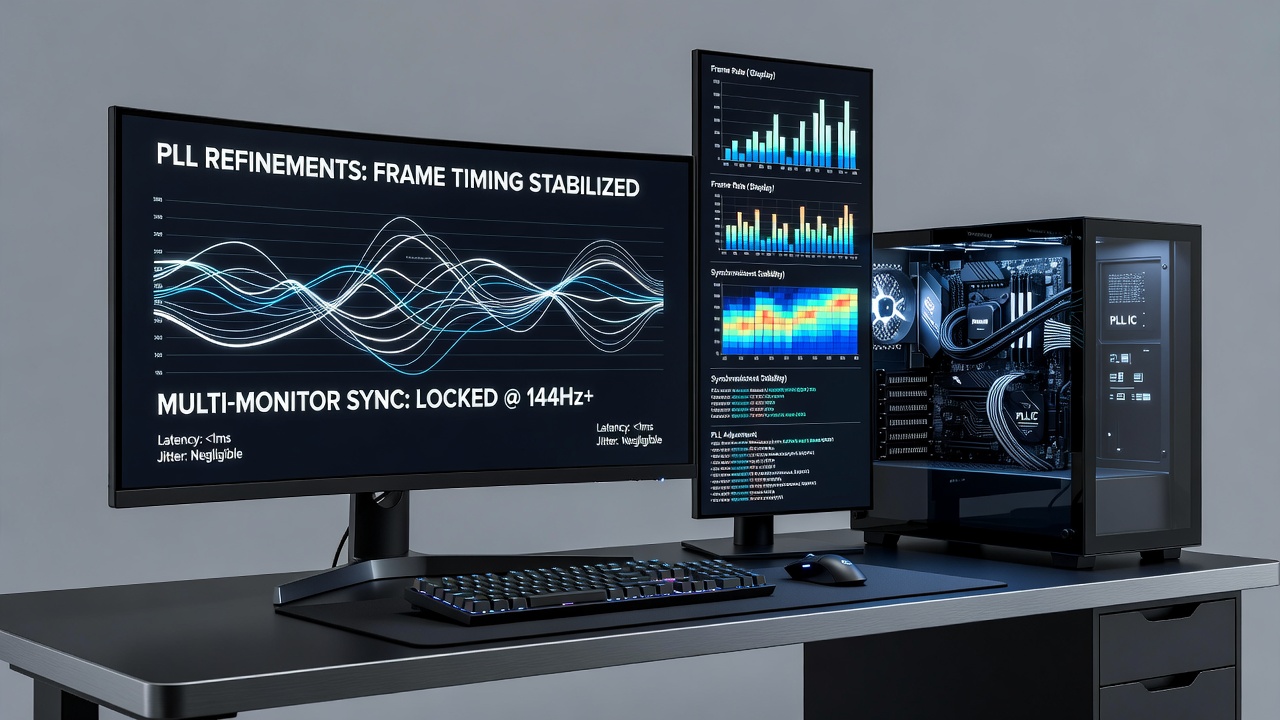
Refined PLL circuitry operates alongside established adaptive sync protocols yet provides an additional layer of hardware-level stability that software-based frame pacing alone cannot guarantee. When multiple monitors run at differing refresh rates, the enhanced loops allow dynamic clock generation that respects each panel's native timing while preserving overall frame coherence across the desktop. Tournament participants report that these improvements eliminate the need for manual bezel correction adjustments mid-match, freeing support staff to focus on network and input latency tuning instead.
Industry reports indicate that graphics card manufacturers began shipping these PLL revisions in volume starting mid-2025, with firmware updates extending support to earlier card generations through driver-level calibration routines. The changes have proven particularly relevant for configurations using DisplayPort daisy-chaining, where cumulative signal regeneration can otherwise amplify timing errors across chained monitors.
Measurement and Validation Practices
Validation teams employ high-speed oscilloscopes and frame capture cards to quantify timing alignment before equipment reaches competition floors. Metrics collected include peak-to-peak jitter on vertical sync lines, cumulative phase error across all outputs, and frame presentation latency variance under simultaneous GPU and CPU loads. These measurements feed into certification checklists that tournament organizers reference when approving player hardware submissions, ensuring that PLL performance meets circuit-wide standards rather than relying on per-event tuning.
Future Hardware Roadmaps
Upcoming GPU architectures scheduled for late 2026 and 2027 incorporate further PLL enhancements such as digital phase interpolation and machine-assisted loop tuning, developments that build directly on the refinements already deployed. These next iterations aim to support even higher aggregate pixel clocks required by 8K surround setups while maintaining the sub-millisecond frame alignment now expected in professional play.
Conclusion
Phase-locked loop refinements have become a foundational element in stabilizing frame timing for multi-monitor PC configurations within competitive gaming circuits, delivering measurable improvements in synchronization precision that directly support consistent visual output across extended displays. Continued hardware iteration and standardized validation practices indicate that these timing solutions will remain integral to tournament infrastructure as display counts and refresh rates continue to rise.