Procedural Animation Systems Refining Character Interactions During High-Stakes Portable Gaming Leagues
Amir Richter · Aug 13, 2026
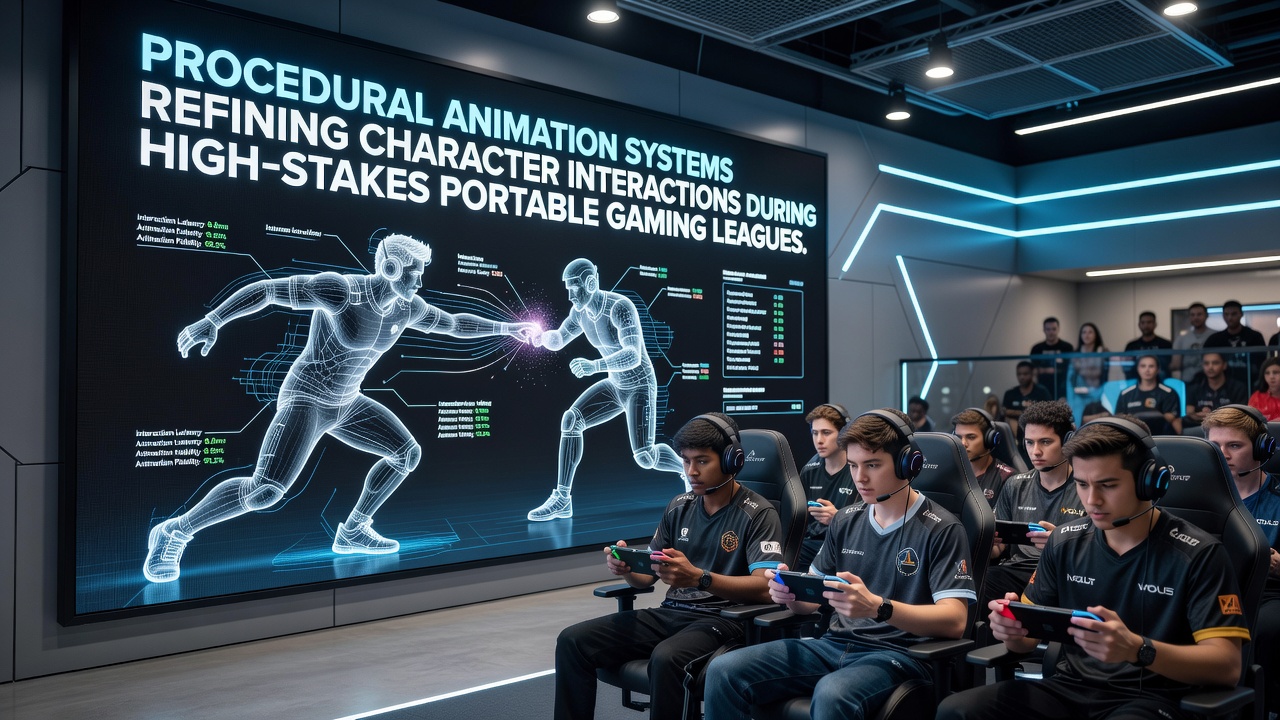
Procedural Animation Systems Refining Character Interactions During High-Stakes Portable Gaming Leagues
Procedural animation systems generate character movements and interactions in real time based on algorithms rather than pre-recorded sequences, and these tools now play a central role in portable gaming leagues where hardware constraints and competitive demands intersect. Developers integrate physics simulations, inverse kinematics, and behavior trees to produce responsive animations that adapt to player inputs and environmental variables during matches.
Core Mechanisms Behind Procedural Systems
Engineers build these systems around modular components that calculate joint positions, velocity adjustments, and collision responses on the fly, which allows characters to interact with uneven terrain or other players without relying on fixed animation clips. Data from mobile tournament hardware indicates that such calculations run efficiently on mid-range processors when optimized for lower power draw, and this efficiency supports extended sessions without thermal throttling.
Researchers at institutions across Europe and North America have documented how procedural layers combine with skeletal rigging to create believable weight shifts and momentum transfers. One study published through the International Game Developers Association examined frame-by-frame outputs from portable devices and found that hybrid procedural-prebaked approaches reduced animation pop-in by measurable margins compared with traditional methods alone.
Deployment in Portable Tournament Hardware
Portable leagues rely on compact devices that must maintain consistent performance across wireless networks and variable battery states. Procedural animation pipelines allocate compute resources dynamically so that character interactions remain fluid even when background processes like network synchronization consume cycles. Figures from industry reports compiled by the Entertainment Software Association reveal increased adoption of these techniques in devices released between 2024 and 2026.
During events held in August 2026, organizers noted smoother transitions between locomotion states and combat actions in several mobile titles, attributing the improvements to refined procedural solvers that handle simultaneous inputs from multiple participants. These updates allowed referees and spectators to observe fewer animation artifacts when players executed rapid directional changes or object manipulations under pressure.
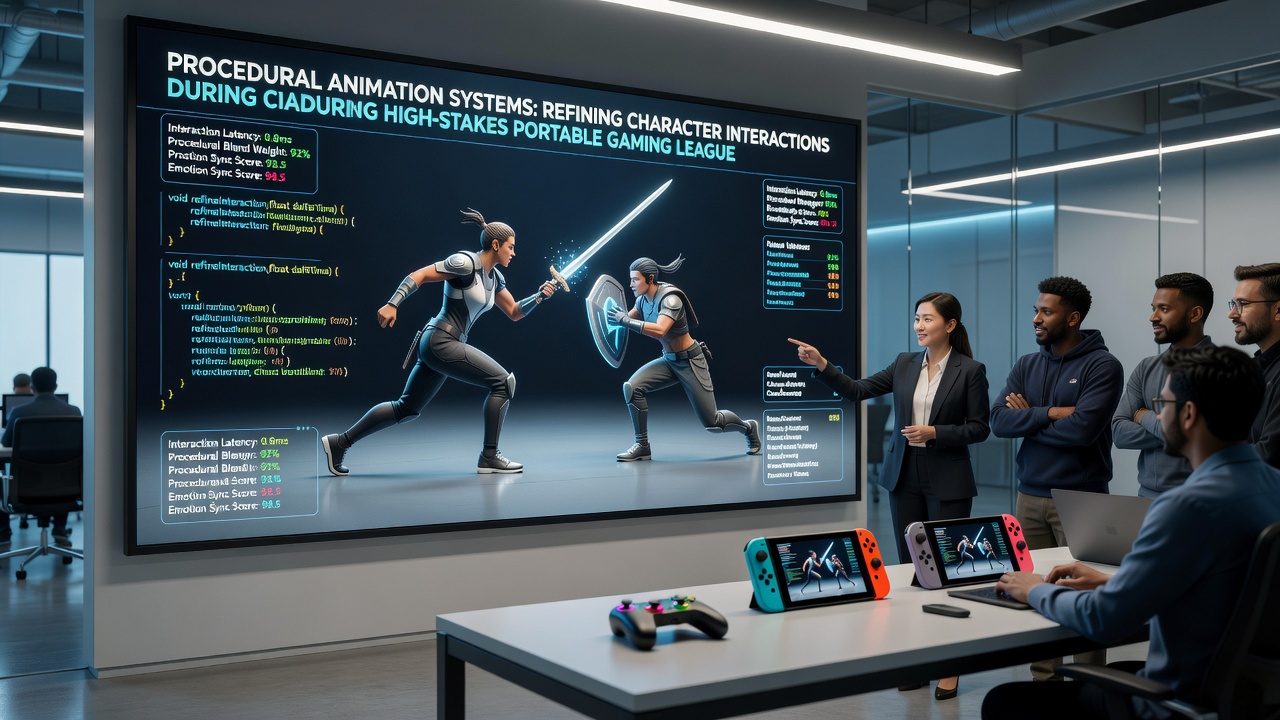
Impact on Character Interactions in Competitive Play
High-stakes matches demand precise visual feedback so participants can read opponent intentions through subtle movement cues. Procedural systems deliver this feedback by modulating animation parameters according to current game state variables such as health, speed, and proximity. Observers note that characters now exhibit context-aware reactions like bracing for impact or adjusting posture during team maneuvers, elements that scripted sequences often cannot replicate at the same granularity.
Academic work from Australian research groups has explored how these algorithms scale across different screen resolutions and input methods common in portable esports. Their findings show that procedural outputs maintain coherence when devices switch between touch controls and external controllers, which helps standardize the competitive experience across varied hardware configurations.
Technical Challenges and Ongoing Refinements
Memory bandwidth limitations on portable platforms require careful scheduling of animation blend calculations, and developers address this through level-of-detail systems that reduce bone counts during distant interactions. Network latency adds another layer because client-side predictions must align with server-authoritative animation states to prevent desyncs visible to both players and audiences.
Industry data collected by Canadian trade organizations indicates that teams integrating machine-learning-assisted procedural controllers have achieved lower variance in animation quality across different network conditions. These controllers learn from aggregated match replays to predict likely interaction outcomes and precompute partial solutions, which shortens response times during critical moments.
Future Directions in League Environments
Continued work focuses on tighter integration between procedural animation and audio systems so that movement sounds match generated motions without additional authoring overhead. Portable leagues scheduled for late 2026 plan to test expanded procedural layers that incorporate environmental storytelling elements, such as characters reacting to weather or stage hazards in real time.
Cross-platform testing protocols now include standardized benchmarks for animation fidelity under tournament conditions, and these protocols help organizers verify that all competitors operate under equivalent visual conditions. Reports from the European Games Developer Federation highlight collaborative efforts to share optimization techniques across studios targeting the same portable hardware ecosystems.
Conclusion
Procedural animation systems continue to shape how characters interact within portable gaming leagues by delivering adaptable, context-sensitive movements that align with the pace and precision required in competitive settings. As hardware capabilities advance and algorithms mature, these tools support increasingly complex interactions while respecting the power and thermal limits inherent to mobile tournament play. Data from ongoing events and research initiatives demonstrate measurable progress in animation consistency and player feedback quality across diverse device configurations.