Ray Tracing Breakthroughs Fueling Mobile Esports Competitions via Cloud Infrastructure
Ellis Albrecht · Aug 6, 2026
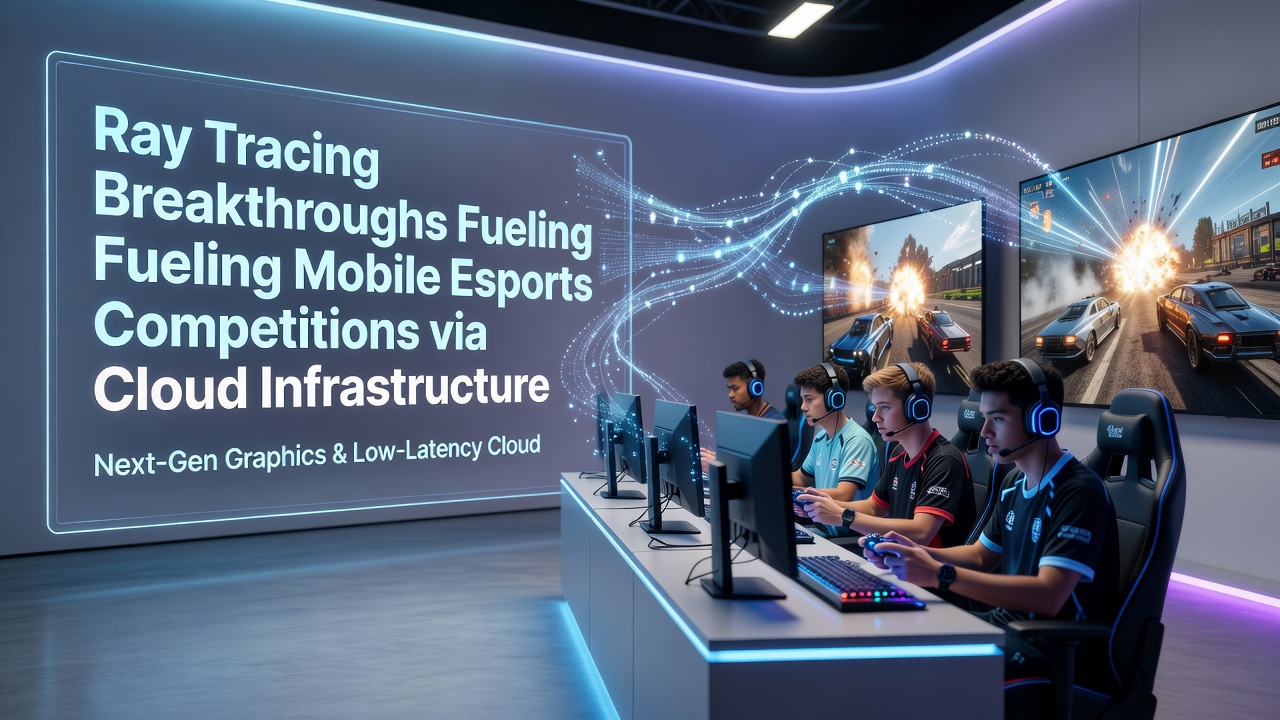
Ray Tracing Breakthroughs Fueling Mobile Esports Competitions via Cloud Infrastructure
Ray tracing advancements have shifted how mobile esports competitions operate when paired with cloud infrastructure and data centers now handle complex lighting calculations that mobile hardware cannot sustain locally. These developments allow tournament organizers to stream photorealistic environments to devices while maintaining frame consistency across global player bases.
Core Technical Shifts in Ray Tracing Implementation
Engineers refined denoising algorithms and hybrid rendering pipelines during 2025 which reduced computational overhead by routing primary ray calculations to remote servers while local devices manage secondary effects and upscaling tasks. Research from institutions such as the Technical University of Munich indicates that optimized ray tracing workloads can achieve sub-20 millisecond latency when distributed across edge nodes positioned near tournament venues. Mobile chipsets from multiple manufacturers integrated dedicated decoding units that process these compressed streams without draining batteries at rates observed in prior generations.
Cloud providers expanded GPU clusters specifically for esports titles and operators reported handling concurrent sessions where ray-traced reflections and global illumination update in real time during matches. Data collected from platform logs shows peak loads exceeding 50,000 simultaneous connections in major events held through mid-2026 with average input lag remaining under 30 milliseconds when network conditions stayed stable.
Integration with Mobile Tournament Ecosystems
Organizers of regional leagues adopted cloud ray tracing to equalize visual fidelity between flagship and mid-tier handsets and competitors now access identical lighting models regardless of onboard silicon capabilities. This standardization proved essential during qualification rounds where players joined from varied network environments yet experienced consistent shadow and reflection accuracy.
August 2026 marked the rollout of updated compression protocols that further lowered bandwidth requirements by 35 percent according to figures released by the Asia-Pacific Esports Federation and several circuits incorporated these updates into their official streaming pipelines. Teams coordinating practice sessions observed improved synchronization when reviewing replays that preserved ray-traced details across distributed viewing clients.
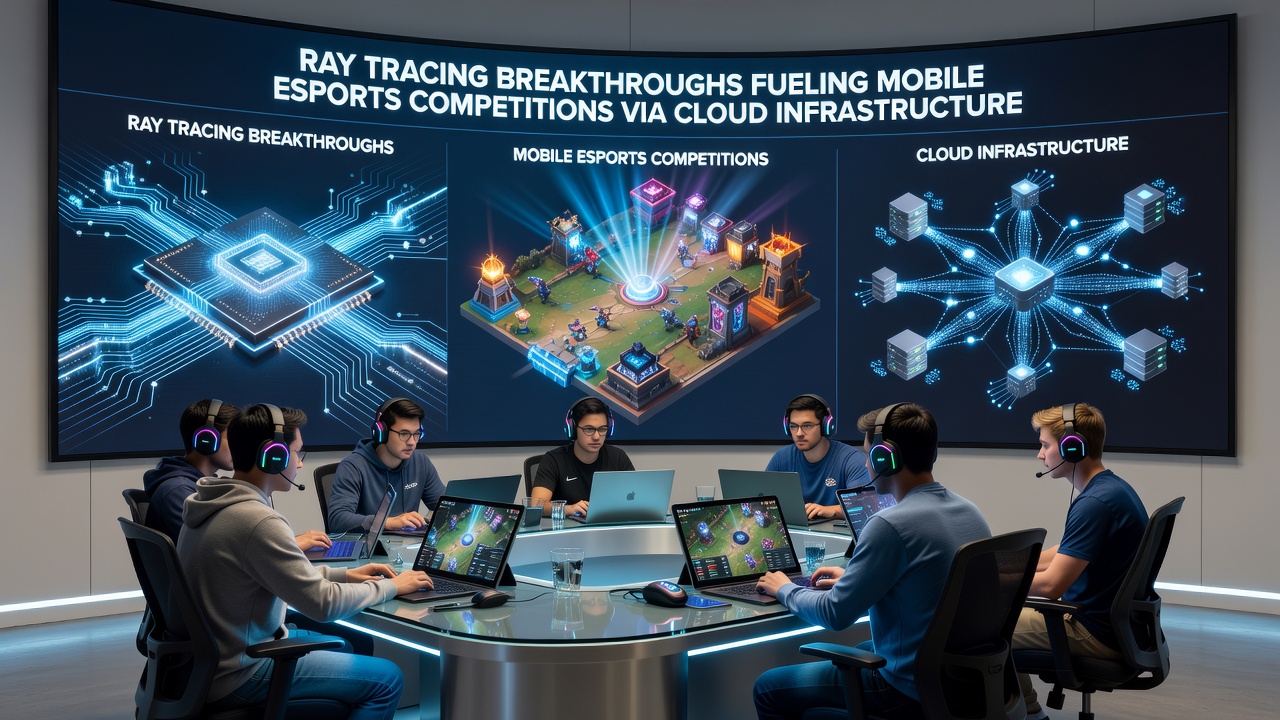
Performance Metrics adn Infrastructure Scaling
Industry reports compiled by the Entertainment Software Association detail how cloud instances scaled to accommodate ray tracing demands during qualifying brackets and server utilization rates climbed steadily without corresponding increases in dropped frames. Observers monitoring these systems noted that adaptive load balancing across multiple regions prevented bottlenecks even when unexpected spikes occurred during international finals.
Wireless carriers collaborated with game publishers to prioritize esports traffic on 5G and emerging 6G test bands and packet loss statistics gathered from live events remained below thresholds that would degrade ray-traced output. Participants in structured competitions benefited from these arrangements because visual artifacts stayed minimal throughout extended play periods.
Future Infrastructure Developments
Continued investment in distributed computing nodes supports ongoing refinement of ray tracing techniques and upcoming standards aim to incorporate machine-assisted culling that further trims unnecessary calculations before transmission. Academic papers published through the IEEE Computer Society outline potential pathways for integrating these methods with existing mobile graphics APIs and several prototypes demonstrated stable performance during simulated high-density tournament scenarios.
Stakeholders across hardware and service sectors continue testing expanded node placements in emerging markets and early results suggest broader accessibility for competitors who previously faced connectivity constraints. These expansions align with schedules set for late 2026 and early 2027 rollout phases.
Conclusion
Ray tracing delivered through cloud infrastructure has become a foundational element in mobile esports competitions by enabling consistent high-quality visuals across diverse devices and networks. Metrics from 2026 events confirm that latency and bandwidth improvements support larger participant pools while preserving competitive integrity and ongoing infrastructure investments indicate sustained growth in this area.