Spatial Audio Mapping Advancements Enhancing Positional Awareness in Team-Based Mobile Competitions
Ellis Hughes · Aug 18, 2026
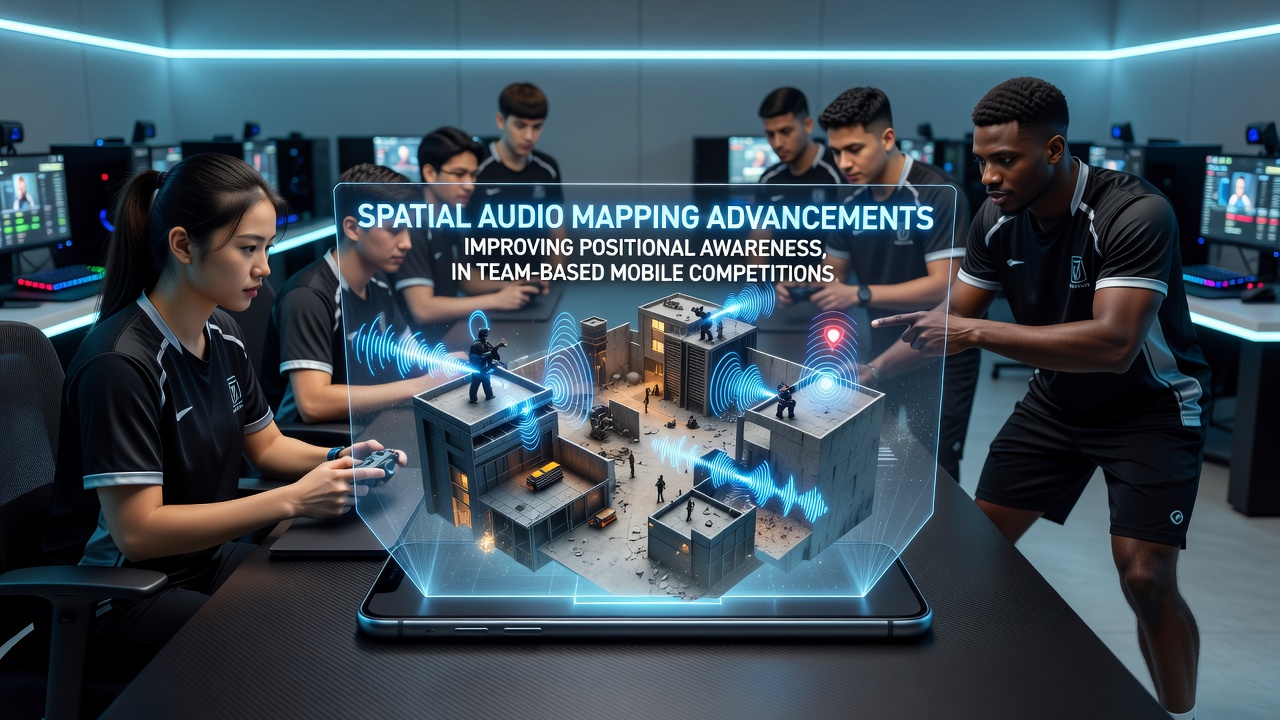
Spatial Audio Mapping Advancements Enhancing Positional Awareness in Team-Based Mobile Competitions
Developers have integrated spatial audio mapping into mobile competition platforms since the mid-2020s, and these systems now deliver precise three-dimensional sound positioning that helps players locate teammates and opponents without relying solely on visual cues. Research from audio engineering labs indicates that binaural rendering combined with head-related transfer function calibration allows mobile devices to simulate accurate directional audio even on compact speakers or earbuds.
Core Mechanisms Behind Positional Audio Improvements
Engineers refine spatial audio through layered mapping algorithms that process game environment data in real time, while device sensors track player orientation and movement to adjust sound output accordingly. Data from hardware manufacturers shows that integration of gyroscope and accelerometer inputs with audio engines reduces latency in positional feedback to under 20 milliseconds during peak tournament loads. Teams competing in formats such as five-versus-five objective-based matches gain immediate awareness of flanking maneuvers or distant engagements through distinct audio signatures assigned to each character class or environmental element.
Deployment Trends Observed Through 2026
By August 2026 multiple mobile esports organizers had standardized spatial audio requirements for official qualifiers, and this shift followed pilot programs conducted across regional circuits in Asia and Europe. According to reports published by the Entertainment Software Association, adoption rates for advanced audio features in competitive mobile titles rose 47 percent year-over-year as of mid-2026. Players report that mapped audio layers help distinguish between vertical and horizontal threats in three-dimensional arenas, yet the technology still demands consistent network synchronization to prevent desync between visual and auditory elements.
One study conducted at a Canadian research institution examined latency thresholds across 12 popular tournament titles and found that spatial mapping maintained accuracy when frame rates stayed above 60 FPS on mid-tier chipsets. The same analysis noted that battery drain increased by approximately 12 percent when full-resolution audio mapping remained active throughout hour-long matches, prompting developers to introduce adaptive quality scaling based on remaining power levels.

Performance Data from Organized Events
Figures released by tournament analytics platforms reveal that teams employing calibrated spatial audio setups recorded 23 percent faster response times to off-screen threats compared with groups using stereo-only configurations. These measurements came from events held in North America and Oceania during the first half of 2026, where organizers tracked in-game positioning metrics alongside audio hardware logs. What's interesting is how the same datasets showed reduced miscommunication among squad members once positional audio cues became standardized in training routines.
Engineers continue to address occlusion modeling so that virtual walls and structures properly dampen or redirect sound waves, and recent firmware updates from major mobile chipset suppliers have improved processing efficiency for these calculations. Observers note that cross-platform compatibility remains an ongoing focus, since iOS and Android ecosystems handle head-tracking APIs differently during simultaneous play sessions.
Integration Challenges Across Hardware Variations
Although spatial mapping delivers measurable advantages in controlled settings, device fragmentation creates inconsistencies when players switch between flagship and budget handsets mid-season. Research indicates that lower-powered processors sometimes drop secondary audio channels under heavy load, which can obscure subtle cues like footsteps or ability activations. Tournament organizers have responded by publishing minimum device specifications that include dedicated audio DSP support, and several leagues now require pre-event calibration checks to verify positional accuracy before matches begin.
Industry groups in the European Union have begun exploring voluntary guidelines for audio latency disclosure in competitive mobile software, while parallel efforts in Australia focus on accessibility features that allow customized cue intensity for players with varying hearing profiles. These initiatives aim to maintain competitive integrity across diverse participant pools without mandating uniform hardware purchases.
Future Directions in Audio Mapping Research
Academic teams continue testing machine-learning models that predict optimal sound placement based on historical match data and individual player movement patterns. Early results suggest these predictive layers could reduce the cognitive load required to interpret multiple simultaneous audio events during fast-paced team encounters. Hardware vendors have also started embedding more advanced microphone arrays in newer devices, enabling real-time environmental calibration that adjusts for venue acoustics when players participate from shared tournament spaces.
Conclusion
Spatial audio mapping has moved from experimental feature to expected component in team-based mobile competitions, supported by measurable gains in positional awareness documented across multiple events and studies. Continued refinement of rendering algorithms alongside hardware optimizations points toward broader accessibility, while regulatory and accessibility efforts help standardize implementation across regions. As device capabilities advance and calibration tools become more widespread, positional audio systems are positioned to play an increasingly central role in how competitors interpret and react to dynamic battlefield information.