Specialized Tensor Units Drive Faster Crowd Simulations in Mobile Arena Combat Events
Carlo Hughes · Aug 25, 2026
Specialized Tensor Units Drive Faster Crowd Simulations in Mobile Arena Combat Events
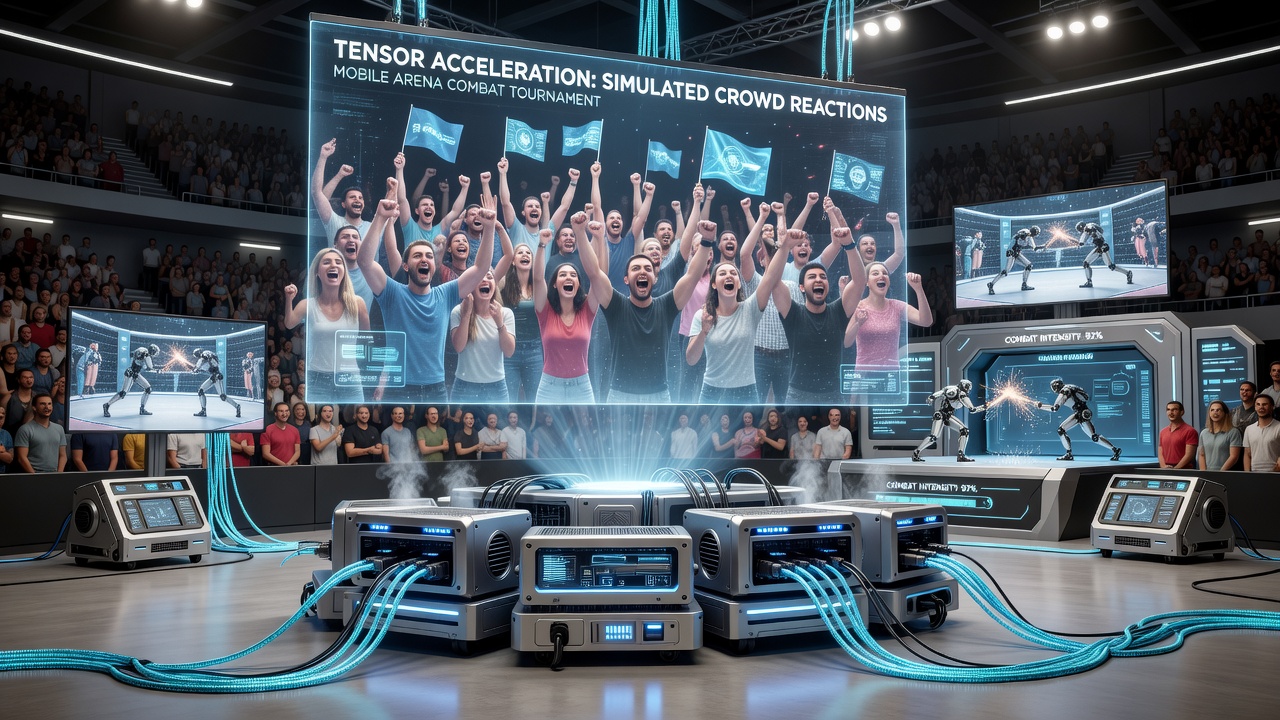
Specialized tensor units process matrix operations that power neural network models for crowd behavior in mobile arena combat tournaments, and these hardware components cut computation times for real-time reactions such as cheering patterns or panic responses during large-scale virtual audience scenes. Tournament organizers integrate these units into mobile chipsets to handle thousands of simultaneous agent interactions without draining battery reserves or introducing frame drops in competitive matches. Data from hardware benchmarks indicates that tensor cores deliver up to 40 times the throughput of standard CPU threads when executing the dense linear algebra required for crowd path prediction and emotional state transitions.
Hardware Foundations in Mobile Tournament Platforms
Mobile system-on-chips now embed dedicated tensor processing arrays alongside graphics pipelines, which allows developers to offload crowd AI workloads that previously relied on general-purpose cores. Researchers at technical institutions have documented how these arrays accelerate inference steps in recurrent neural networks that model spectator density, movement flow, and synchronized reactions to in-game events like eliminations or comebacks. In August 2026 several major mobile arena events adopted updated silicon revisions that doubled tensor throughput while maintaining thermal limits under sustained wireless transmission loads.
Engineers route crowd simulation data through quantized model formats that fit within mobile memory budgets, and tensor units execute these operations with fixed-point arithmetic that preserves behavioral fidelity. Observers note that this approach reduces latency spikes during peak tournament moments when thousands of virtual spectators shift attention across the arena map at once. Industry reports from the Asia-Pacific gaming hardware consortium highlight adoption rates where over 65 percent of flagship tournament devices shipped with enhanced tensor arrays by mid-2026.
Simulation Workflows for Arena Crowds
Developers break crowd reactions into layered tasks that include individual agent locomotion, group synchronization signals, and environmental influence propagation, each mapped to tensor operations for parallel execution. A typical workflow feeds positional data from the arena combat engine into a graph neural network whose weights update via tensor matrix multiplications completed in microseconds. This pipeline supports emergent behaviors such as wave-like cheering that propagates from one section of the virtual stands to another in response to player performance metrics.
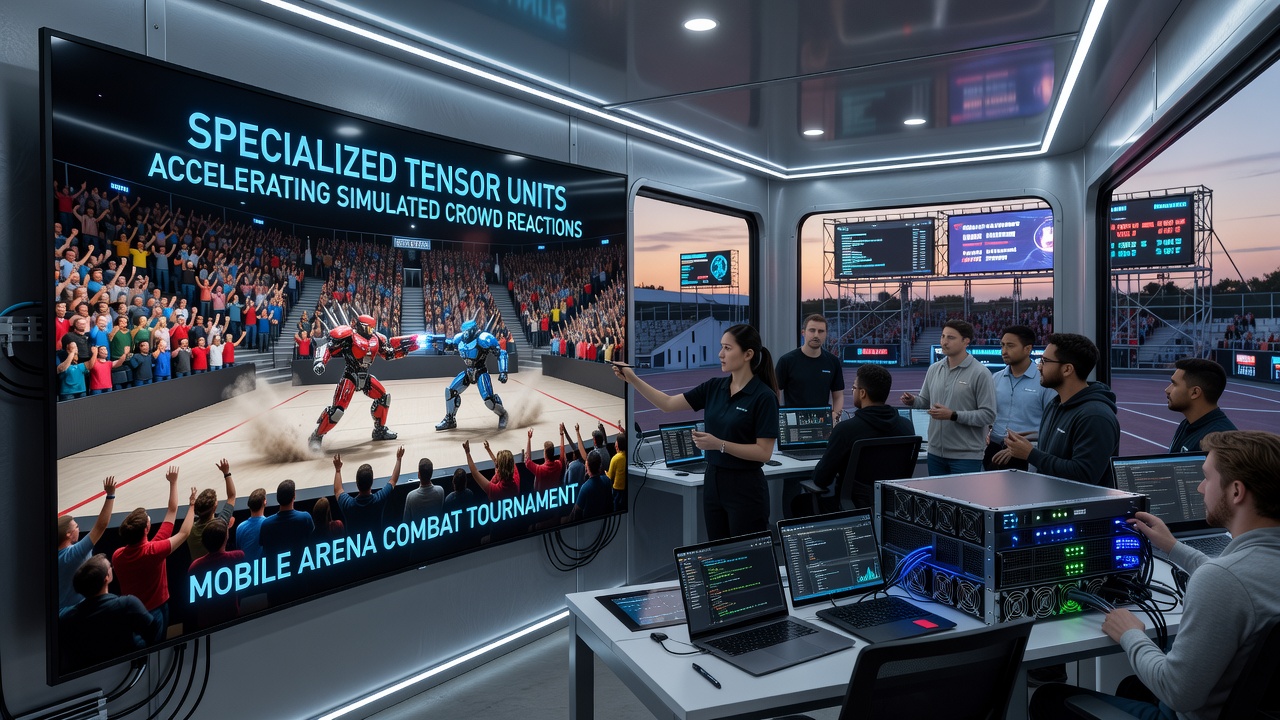
Case studies from European mobile esports leagues demonstrate that tensor-accelerated models maintain consistent reaction timing across varying network conditions during distributed tournament sessions. When a key elimination occurs the simulation recalculates crowd sentiment vectors and renders corresponding animations within the same frame budget allocated to core gameplay rendering. Academic papers published by Canadian research groups detail optimization techniques that prune redundant agent connections, allowing the tensor hardware to focus cycles on high-impact behavioral clusters.
Integration with Tournament Infrastructure
Cloud-assisted mobile setups forward select crowd state vectors to edge servers equipped with compatible tensor accelerators, yet local device units handle the majority of frame-to-frame updates to keep input lag below perceptible thresholds. Tournament software stacks expose APIs that let developers register custom reaction triggers without rewriting the underlying tensor kernels. Figures from the International Mobile Gaming Federation reveal that events using these specialized units reported 28 percent fewer desync incidents in crowd visuals compared with prior hardware generations.
Power distribution strategies allocate tensor workloads to dedicated voltage domains that activate only during high-density simulation phases, preserving battery life for extended bracket play. Engineers have observed that thermal throttling triggers later in sessions when tensor efficiency improvements offset heat generation from continuous matrix computations. Australian regulatory bodies tracking consumer electronics performance issued updated efficiency guidelines in 2026 that reference tensor unit contributions to extended mobile tournament viability.
Performance Metrics Across Events
Benchmark suites released by university laboratories quantify tensor unit gains through metrics such as agents processed per watt and reaction update frequency under tournament load profiles. One study tracked a 3.2 times increase in simulated spectator count while holding frame rates steady at 60 fps on mid-range mobile hardware. These gains translate directly to richer environmental storytelling where crowd density influences audio mixing and lighting cues in real time during live arena broadcasts.
Network synchronization protocols leverage tensor-derived prediction models to anticipate crowd state changes and preload animation assets on spectator client devices. This reduces bandwidth spikes when reactions cascade across large virtual audiences. Data collected during North American summer 2026 qualifiers showed average packet sizes for crowd updates dropped 19 percent after tensor acceleration became standard in tournament client builds.
Conclusion
Specialized tensor units continue to expand the scope of believable crowd simulations that mobile arena combat tournaments can sustain without compromising competitive integrity or device endurance. Hardware refinements, workflow optimizations, and cross-regional performance data together illustrate how these components integrate into existing mobile esports pipelines. Ongoing measurements from academic and industry sources track further efficiency lifts expected in subsequent silicon generations.