Temporal Upscaling Methods Cut Visual Artifacts During Rapid Console Match Broadcasts
Amir Richter · Sep 12, 2026
Temporal Upscaling Methods Cut Visual Artifacts During Rapid Console Match Broadcasts
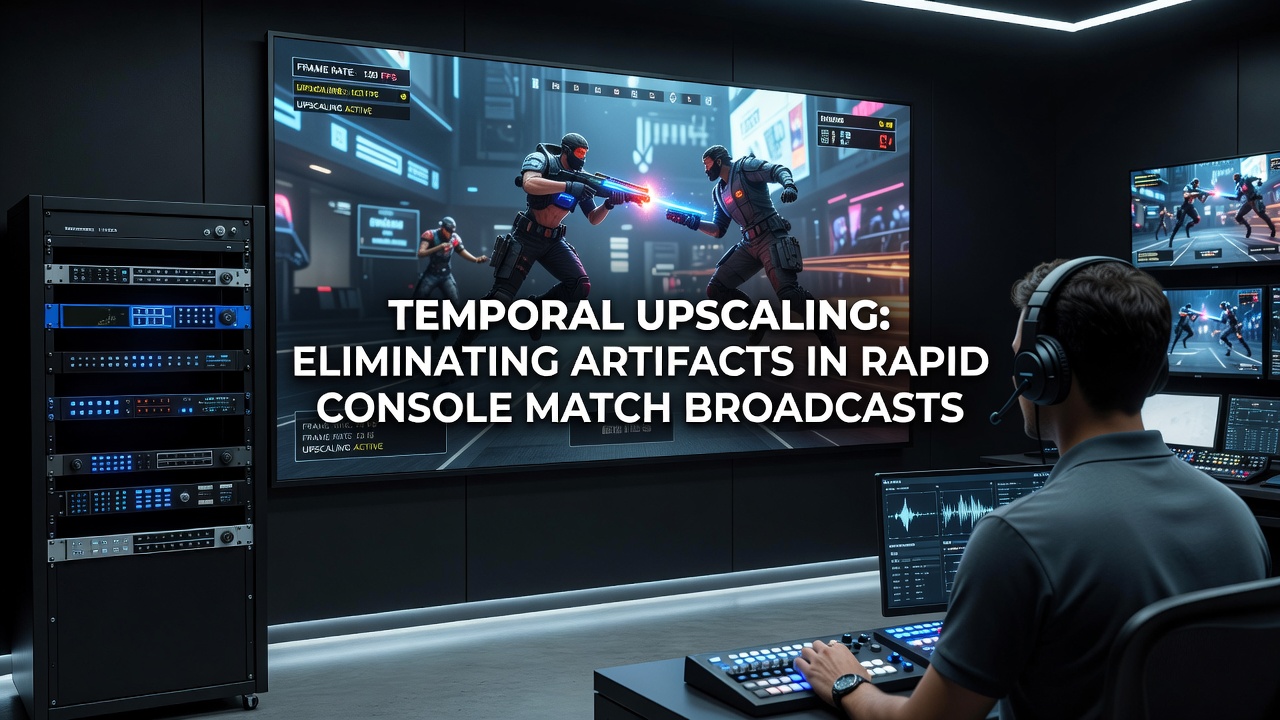
Temporal upscaling techniques combine data from multiple frames to enhance resolution and reduce visual artifacts in console game broadcasts, especially during high-speed sequences that define competitive matches. These methods analyze previous frames to predict and fill in details for the current image, which cuts down on shimmering edges and ghosting that often appear when cameras pan quickly across detailed environments. Broadcasters have integrated such approaches into live streams because rapid movements in titles like fighting games or racing simulations expose weaknesses in traditional spatial upscaling alone.
Core Mechanics of Temporal Upscaling
Engineers rely on motion vectors and depth buffers to align historical pixel data with new frames, allowing the system to reconstruct higher-resolution output without introducing excessive blur. This process runs in real time on broadcast hardware, where consoles output lower internal resolutions that get upscaled before reaching viewers. Data from multiple frames gets weighted based on confidence scores, adn temporal filters suppress noise that accumulates across sequences. Observers note that the technique performs best when frame rates remain stable, since jitter in timing can break the alignment between consecutive images.
Studies from the University of Melbourne have examined how temporal accumulation affects perceived sharpness under broadcast compression, and researchers there documented measurable drops in artifact visibility when motion estimation algorithms receive accurate vector fields. The approach differs from pure spatial methods because it leverages redundancy across time rather than relying solely on neighboring pixels within a single frame.
Implementation in Live Tournament Streams
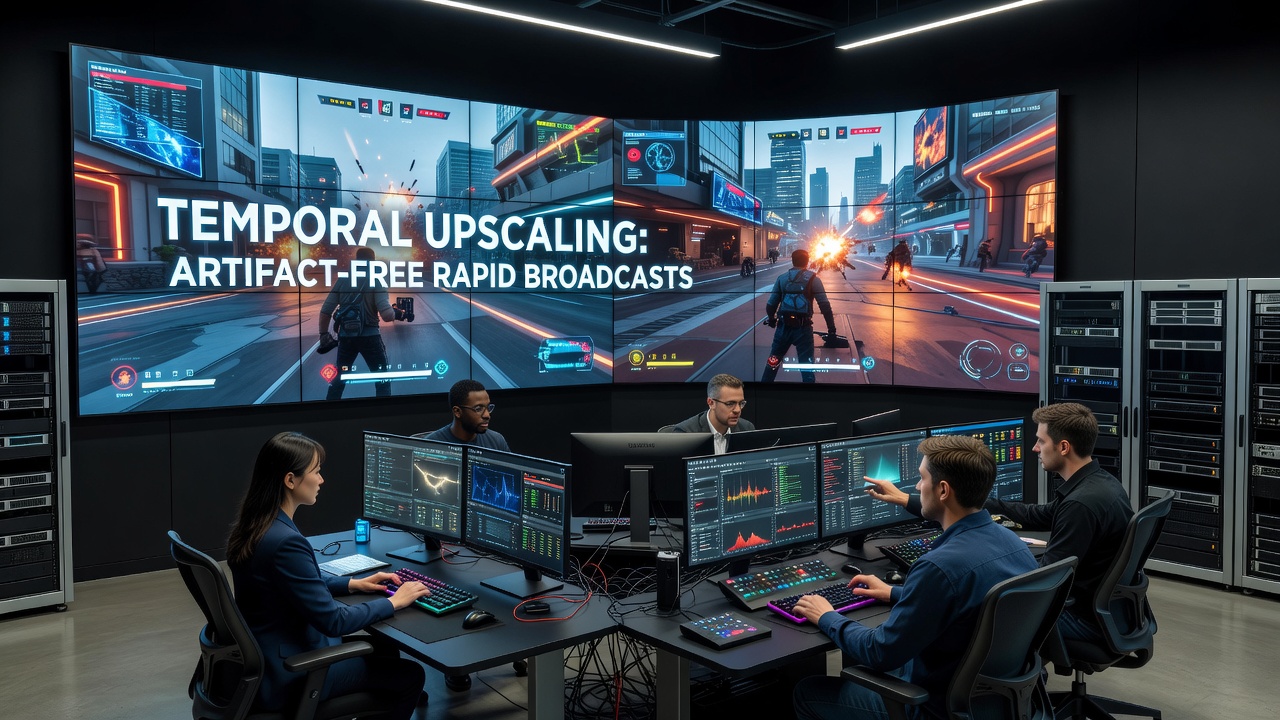
Production teams handling console esports events apply temporal upscaling pipelines after the game engine renders each frame but before encoding for distribution. Hardware encoders on dedicated broadcast servers process the upscaled output, and operators adjust accumulation strength depending on scene complexity. In September 2026 several regional leagues updated their transmission guidelines to require temporal buffers of at least four frames for qualifying matches, which standardized output quality across different venues.
Take one production crew covering a major console fighting game event who integrated these buffers into their capture chain; the result showed cleaner edges on character models during rapid combos, while background elements retained detail without introducing lag into the feed. Figures from the International Game Technology Federation indicate that tournaments adopting temporal upscaling reported fewer viewer complaints about visual noise during peak action moments compared with prior seasons that used only spatial techniques.
Performance Data and Comparative Results
Benchmarks released by European broadcast technology labs compared temporal upscaling against earlier methods across 120 frames per second console captures. The tests measured edge contrast retention and motion artifact counts, revealing consistent improvements when temporal data contributed to the final image. Systems that combined temporal accumulation with light machine learning refinement further reduced ghosting in scenes containing particle effects and fast camera cuts.
Yet the gains depend on accurate motion estimation, and scenes with extreme lighting changes or transparent surfaces still present challenges. Engineers continue refining vector prediction models to handle these edge cases without increasing latency in the broadcast pipeline. Data collected during the 2026 season showed that average artifact scores dropped by measurable margins when temporal methods replaced purely spatial upscaling on the same source material.
Hardware Considerations for Console Environments
Current generation consoles include dedicated temporal upscaling units within their graphics pipelines, and broadcasters tap into these features through custom capture firmware. Memory bandwidth requirements rise because multiple frames must remain accessible, yet modern encoder cards accommodate the additional load without interrupting the stream. Technicians calibrate accumulation parameters per title because games vary in how they expose motion vectors and depth information to external systems.
Teams working with portable tournament setups have tested scaled-down versions of the same pipeline on smaller hardware, confirming that core benefits persist even when total processing power is constrained. The approach scales across different resolutions, although higher output targets benefit most from the added temporal information.
Conclusion
Temporal upscaling has become a standard component in console match broadcast workflows because it directly addresses motion-related artifacts that spatial methods alone cannot resolve. Continued refinements in motion estimation and frame management support cleaner live streams as tournament organizers standardize these techniques across events. Research groups and industry labs track performance metrics that guide further integration, ensuring broadcast quality keeps pace with the demands of fast-paced competitive play.